Objective of the Game
The objective of the game is to reduce your opponent’s life points to 0 by strategically attacking them with units placed on the board. Each player starts with 20, 15, or 10 life points, depending on the desired game speed longer, more tactical matches or fast paced, high intensity battles.
At its core, the game is about outmaneuvering your opponent through careful sequencing and strategic placement of units. Players must break through enemy defenses, predict their opponent’s moves, and execute well timed plays to gain the upper hand. Victory isn’t just about raw power it’s about positioning, adaptability, and mastering the battlefield.
Card Anatomy
Game Board Overview
The game board is designed for tactical positioning and strategic play, consisting of six columns and two lanes for each player. The two lanes are divided into the Frontline and the Backline, each serving a unique purpose in battle. To the sides of the play area is a respected deck and graveyard zone for each player.
Frontline & Backline Mechanics
The Frontline is where players deploy their attacking units. This is the primary lane for combat, where units clash head on and players must carefully position their threats and defenses to break through their opponent’s forces.
The Backline is a stealthier approach to battle. A unit can only be placed in the Backline if the Frontline in the same column is already occupied, ensuring that players commit to the frontline first before setting up strategic reinforcements.
Hidden Entry Mechanic: Units placed in the Backline enter face down, meaning they are hidden from the opponent until revealed. This allows for sneaky plays and surprise attacks, forcing opponents to anticipate potential threats.
Tactical Depth & Positioning
The six columns give players multiple avenues of attack, making positioning and allocation of threats a key strategic factor. Every decision, whether to fortify a column, create openings, or conceal a powerful unit in the Backline; can be the difference between victory and defeat. Players must read their opponent’s movements, decide where to apply pressure, and adapt their strategy as the battle unfolds.
Game Mechanics Overview
Turn Structure in tales of aurora
At the start of the game, players determine the first turn by rolling a die. Whoever rolls the highest number goes first. Each player draws five cards as their starting hand. If they don’t like their hand, they may reshuffle all five cards back into the deck and draw a new five, but they must keep the second hand.
On the first turn of the game, the starting player does not draw a card, but otherwise follows the normal turn order.
Turn Order
Gather Essence (Essence Added) – add one Essence (Essence is the vital energy that fuels battle in Tales of Aurora, a lingering remnant of the Awakening Meteor.) Players gain 1 Essence per turn, capping at 10, and use it to deploy units. All Essence that was used in the previous turn becomes active again, preparing for a new round of battle.
Draw (Draw Phase) – The player draws one card from their deck.
Awakening (Ability Phase and Unresting Units) – Units’s who entered rested (sideways) are now active and ready to attack. This is also where players can activate abilities that can be used at this time. (Example: cards that have the keyword "Awakening" with an ability that follows)
Deployment (Placement Phase) – The player deploys their units onto the frontline or backline, preparing for battle. units deployed onto the frontline come in rested/unactive meaning they can’t attack until their next turn.. (on play effects still trigger on units played on the frontline rested)
Clash (Attack Phase) – Units attack from left to right, engaging in combat against enemy forces.
End Phase – The turn ends, passing play to the opponent.
Card Effect Timing
Each unit may have one or more abilities that trigger at specific moments. Below are some common possible effect types:
On Play – Triggers when the unit enters the battlefield from the hand.
On Flip – Triggers when a face down card flips face up (usually due to entering from the backline).
Awakening: an effect that can only be used during the awakening phase. (can only be used if the unit is active/awakened)
Ongoing: – A continuous effect that remains active as long as the unit is on the battlefield.
Strategic Impact: Understanding when abilities trigger allows for careful sequencing and timing, leading to game-changing plays and counterplays.
Card Types in tales of aurora
In Tales of Aurora, there is only one type of card; unit cards. Unlike other games that have spells, artifacts, or out of combat permanents, every card in Tales of Aurora represents a unit with attack, defense, and often a unique ability. The game is entirely focused on strategic unit placement, combat, and positioning, making every decision about which unit to play and where crucial to victory.
However, some units are inherently stronger than others and must be limited to only one copy on the frontline at a time to maintain balance. These special units are called "fabled units" and are powerful figures, beasts, or forces of nature whose presence on the battlefield alone can shift the tide of battle.
Combat in tales of aurora
Combat in Tales of Aurora is a structured yet dynamic battle system that revolves around positioning, sequencing, and tactical decision making. The flow of battle moves left to right, starting from column 1 and continuing through column 6, ensuring that every engagement follows a predictable yet strategically deep attack pattern.
Attack Flow & Damage Resolution
Frontline Engagement – A unit attacks the opponent’s frontline first, dealing permanent damage to the defending unit’s Defense (DEF) equal to its Attack (ATK).
If a unit’s DEF reaches 0, it is destroyed and sent to the Graveyard.
Example: If a unit with 3 ATK attacks an enemy unit with 3 DEF, the defending unit is destroyed immediately. If the defender has 4 DEF, it remains on the field with 1 DEF left.
Attacking the Opponent’s Life Points – If there is no unit obstructing an attack in that row, the attacking unit deals its full ATK as direct damage to the opponent’s life points.
Backline Activation – If an attacking unit destroys a frontline unit and there is a backline unit behind it, combat is momentarily paused:
The backline unit moves up to replace the destroyed unit.
If the backline unit has an on-entry ability, it activates immediately before combat resumes.
Once effects resolve (or if no effects are triggered), attacks continue normally.
Backline Entry Rules – units that move from the backline to the frontline do NOT enter rested. This means they are immediately ready to engage in battle on their turn, allowing for surprise counterattacks and strategic disruptions.
Combat Continues Until All Frontline Units Attack – The attack sequence moves down the rows, ensuring that every active frontline unit gets to strike before passing the turn to the opponent.
Resource Management
At the start of each turn, players gain 1 Essence, increasing their total available Essence for the turn. This continues until turn 10, where players reach the maximum cap of 10 Essence. Essence can be spent to deploy units onto the battlefield, with each unit having an Essence cost that must be paid before deployment. Managing your Essence efficiently and deciding when to play high cost powerhouses versus low cost tactical plays is key to outmaneuvering the opponent.
Game Components
To play a legal game each player must have:
A deck of at least 40 cards – This is the minimum deck size required for gameplay.
A maximum of 4 copies of any single card per deck – This rule ensures balance and variety in deck construction.
Your deck can only mix cards of 2 factions maximum.
A play area, which consists of:
The Game Board – Featuring six rows and two lanes (Frontline & Backline) where units are placed and battle occurs.
A Deck Zone – Where a player's deck is placed for drawing cards.
A Graveyard Zone – Where destroyed units are sent after being defeated in battle.
While an official game mat is not required, it is recommended for easier organization of the board, units, and combat lanes.
With just these components, players can jump into battle, test their strategies, and fight for control over Aurora!
Now that you know how to play, go out there and battle!
Cost: Number on the top left shows the essence cost to deploy a card during the deployment phase
Name: The name of the card is shown in bold right below the art of the card, if the name is shown in silver then the card is a common unit, if it is in another color that means the card is a fabled unit.
Tagline and keyword Color: The tagline is found right under the name of the unit, the color of the tagline shows what faction the card is in. for example, the cards on the right are on the red faction. (note: fabled units will have their name be the color of their faction.)
Card ability: The ability of the unit is shown right below the name of the unit in smaller writing
Stats: the card’s attack and defense are shown on the bottom left.
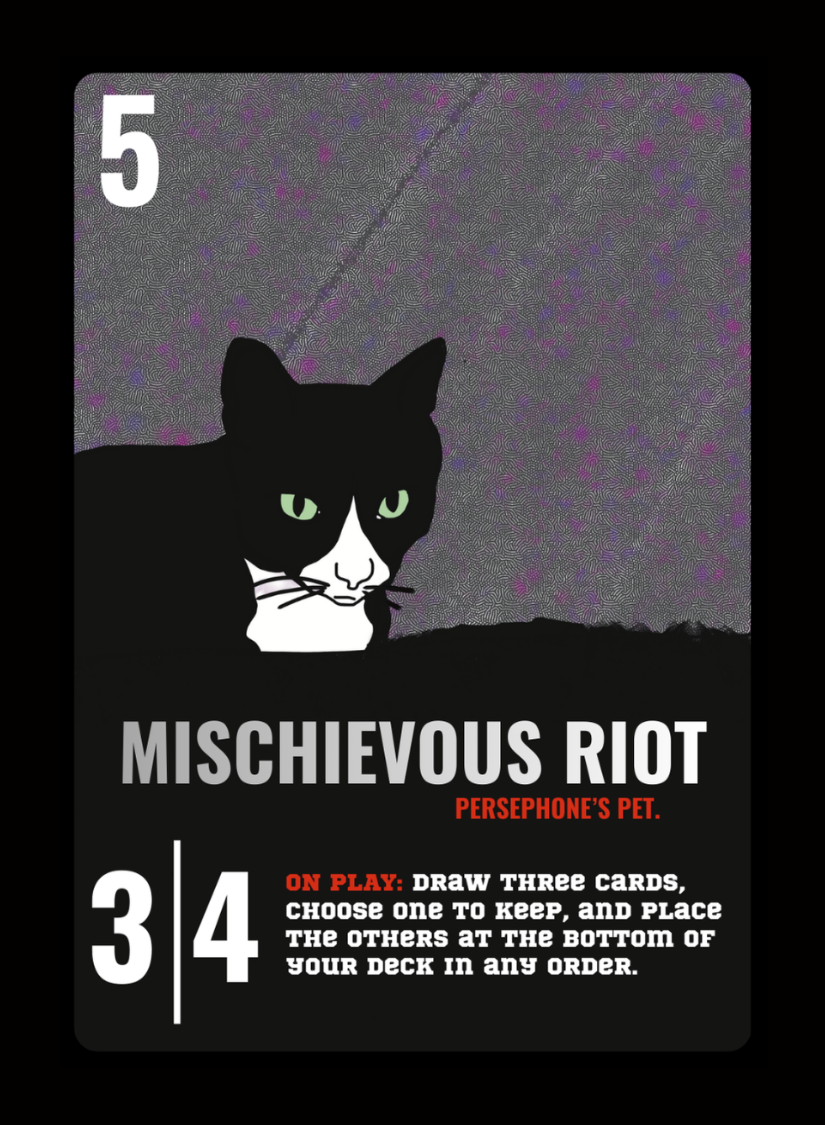
Common
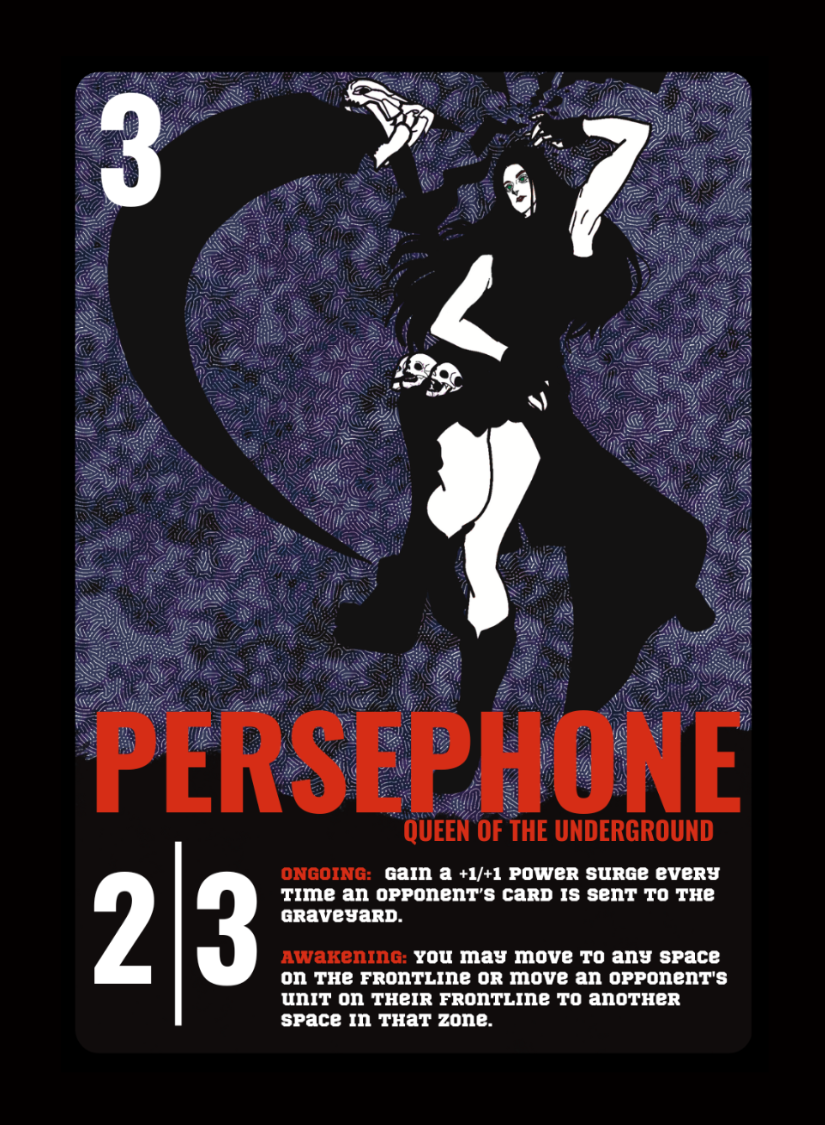
Fabled